The Terry Real Relationship Grid: How Self-Esteem and Boundaries Shape Our Relationships
19th January, 2026
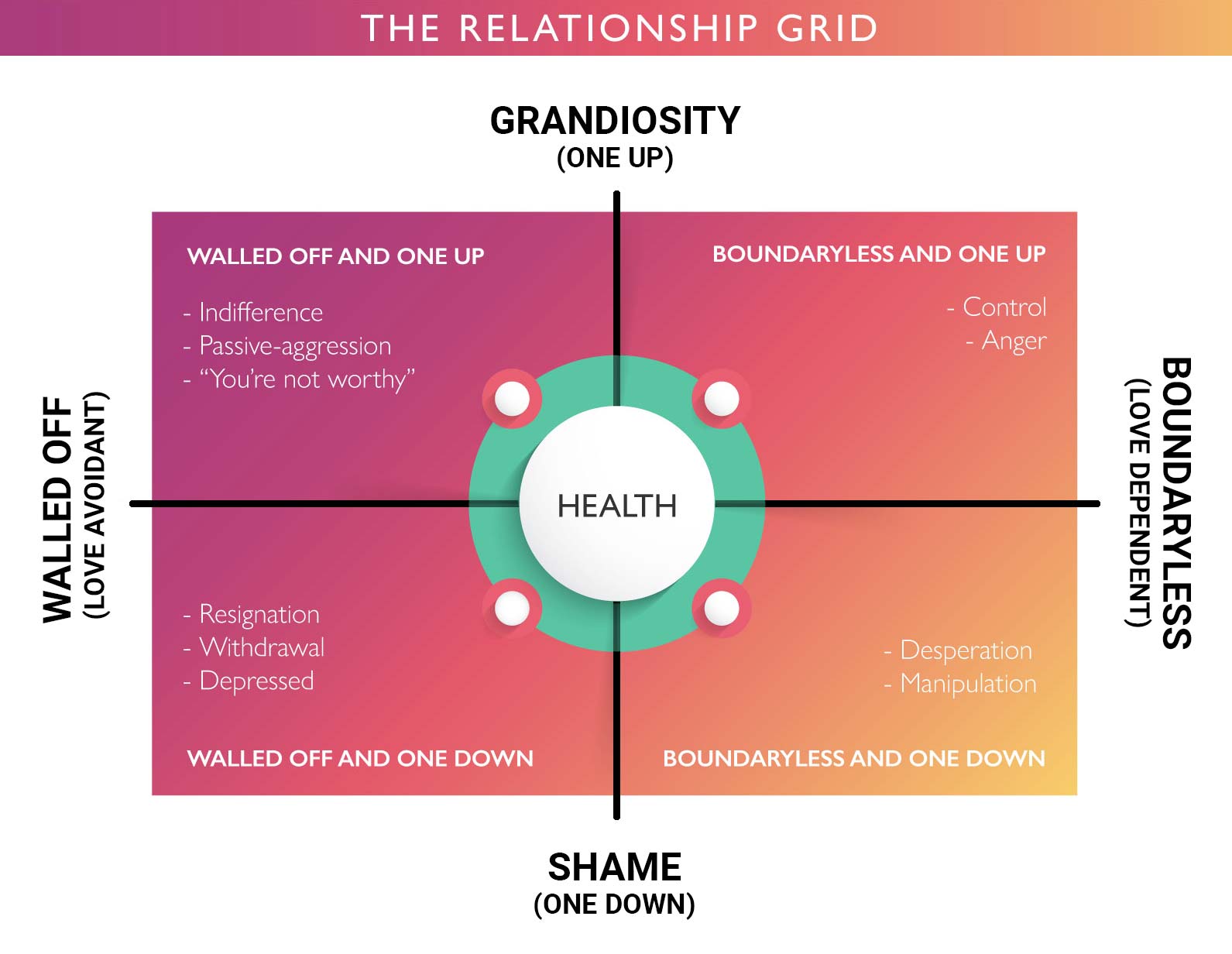
The Relationship Grid, developed by Terry Real, is a powerful way of understanding why we show up in relationships the way we do — especially when things feel stuck, painful, or repetitive.
At its core, the grid looks at two things that shape all relationships: self-esteem and boundaries.
Self-esteem sits on a spectrum. At one end is shame — the belief that something is fundamentally wrong with you. At the other is grandiosity, where a sense of superiority protects against vulnerability. Neither extreme supports healthy connection. Both are ways of staying safe.
Boundaries form the second axis. When boundaries are too porous, we become boundaryless — losing ourselves in others, people-pleasing, or seeking constant reassurance. When boundaries are too rigid, we become walled off — emotionally distant, defended, or controlling. Again, both are protective strategies that once made sense but they serve no purpose in intimate relationships. If you’re adaptive child is running the show, chances are you’re not feeling too happy in your relationships right now.
Where these two axes meet, four common relationship patterns emerge. You might recognise yourself as someone who withdraws and shuts down, over-gives and loses yourself, dominates to stay in control, or hides behind emotional distance. These patterns aren’t character flaws — they are learned responses to earlier relational experiences.
The goal of the grid isn’t perfection. It’s movement towards the centre — a place where self-esteem is stable and boundaries are flexible. From here, relationships feel safer, communication becomes clearer, and intimacy becomes possible without losing yourself.
Understanding the Terry Real Relationship Grid gives language to experiences many people already feel but struggle to explain. And once something is understood, it can be changed.
If your relationships feel hard, this framework can be a powerful first step towards doing things differently.
Want support with this?
If this blog resonated with you, I offer free consultation where we can explore what’s bringing you here and whether working together feels like a good fit.
I also create a range of resources on sexual wellbeing, including both free and paid options, designed to be accessible, shame-aware, and especially supportive for autistic, ADHD, and trauma-affected people.
→ Book a free consultation
→ Explore resources
You’re welcome to take what’s useful and leave the rest.

The Value of Thinking Together
July 31, 2026

How Do I Decide if We’re the Right Fit?
July 21, 2026
How Patriarchy Shapes Our Relationships
July 20, 2026